Suffolk Downs’ Final, Final Finale
If I had to choose a moment to remember from the last weekend of racing at Suffolk Downs what would it be? It could be T.D. Thornton’s final call:
“They approach the quarter pole in the grand finale and they turn into the Suffolk Downs homestretch for the final time … 84 years of history behind them, half a furlong to the finish, and it’s all Catauga County, by seven on the line. Admiration was second, Shiloh Lane was third. Wow! What a long run it’s been, what a wild ride since 1935. Thanks, Suffolk Downs, for a lifetime of great memories!”
It could be paddock analyst Jessica Paquette’s heartfelt goodbye from the scale house roof before the horses left the paddock for the last time.
Or it could be the thunderstorm on Saturday that left the lights flickering in the grandstand and forced the cancellation of the last three races scheduled that day, including the $100,000 James B. Moseley Stakes — which, had it happened, would have honored the man who led the revival of the track in 1992 from a two-year shuttering. In the post-mortem, let it be noted that in its last days, the track remembered its history, recent and long past.
It could be the unexpected sight of a memorial near the winner’s circle, three people standing at the rail, a man shaking out ashes from a bag into the track’s dirt before they crossed themselves and prayed.
Or maybe the woman who, picking her way through puddles, sandals dangling from her hand, cried, “This is the last time I’ll walk barefoot across this track!” As if it were something she did many times. And who knows? Maybe she did. A lot can happen in 84 years, and a lot happened at Suffolk Downs. Tom Smith discovered Seabiscuit. Bill Mott brought Cigar to Boston to win the Mass Cap in 1995 and 1996. Waquoit made his hometown proud in the 1987 Mass Cap.
Those are the high points. Everyone knows them. Most of what happened at Suffolk Downs happened out of the spotlight — it happened to the families who bred and trained horses and worked the grandstand and the backstretch for generations. It happened to the women who wanted to be jockeys and found a track where they could get a foothold. It happened to the kid who came to the track with his dad and then snuck in as a teenager and then made a career in the game. It happened to the young-ish woman who went to Suffolk one day and found the beauty and meaning that so many had before in horses and handicapping. (Am I getting weepy right now? I might be.)
But the moment that I might choose would be the sound of the crowd cheering when the field for the fifth race on Sunday went to the gate after another storm delay. The rain might have chased some people away, but most of the crowd jammed into the grandstand seats and waited out the downpour. They roared and clapped and whooped when the bugle sounded and the horses began to leave the paddock. For a second, the grandstand was a wall of sound, what it was when I went to my first Mass Cap in 2004 and Offlee Wild nipped Funny Cide for the win, what it must have been for so many races before.
It was the sound of people at the track, happy to be there.
Photos from the final weekend at Suffolk Downs:
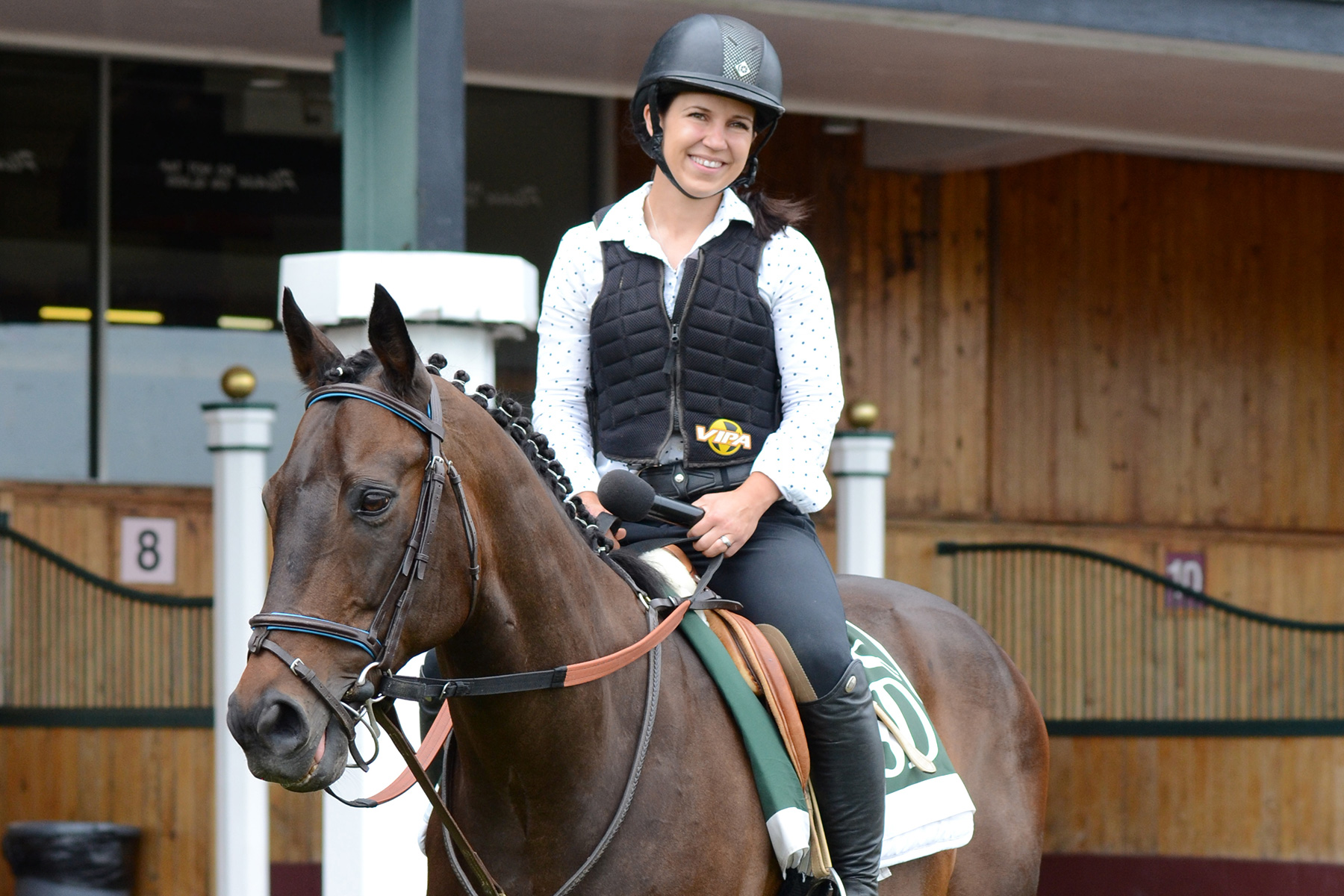
A dream comes true for Jessica Paquette, who rode New England champion — and very good pony — Mr. Meso into the paddock on Saturday and delivered her analysis of the day’s first race from the saddle.
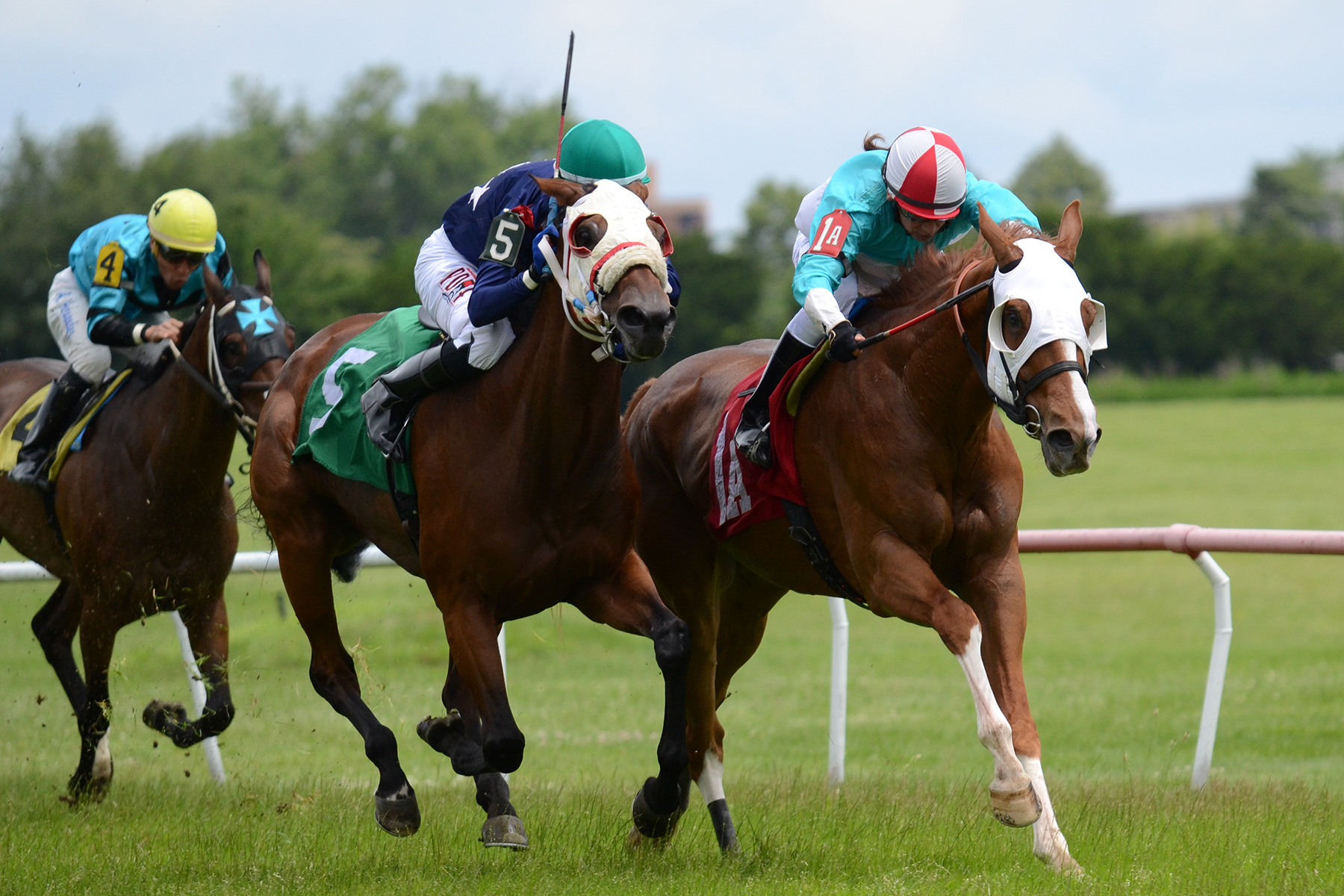
Tammi Piermarini and Saint Alfred (inside) outrun Luis Quinones and Desert Dotty to win the Thomas F. Moran Stakes for Massachusetts-breds on Sunday.
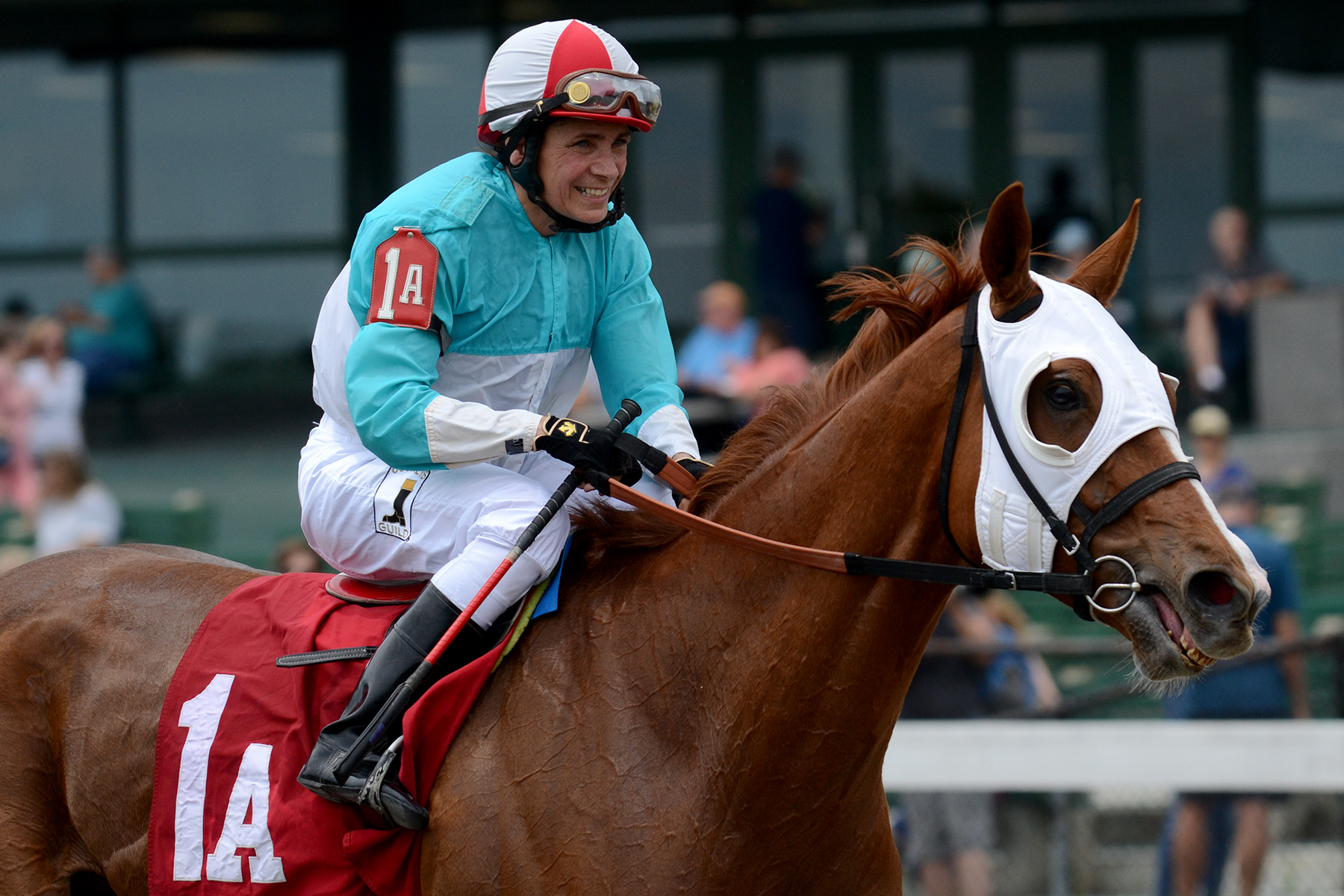
Piermarini and Saint Alfred galloping back after winning the Moran. At the end of Suffolk’s six-day meet, Piermarini topped the track’s jockey standings once again (and for the last time), with 10 wins and $347,650 in earnings.
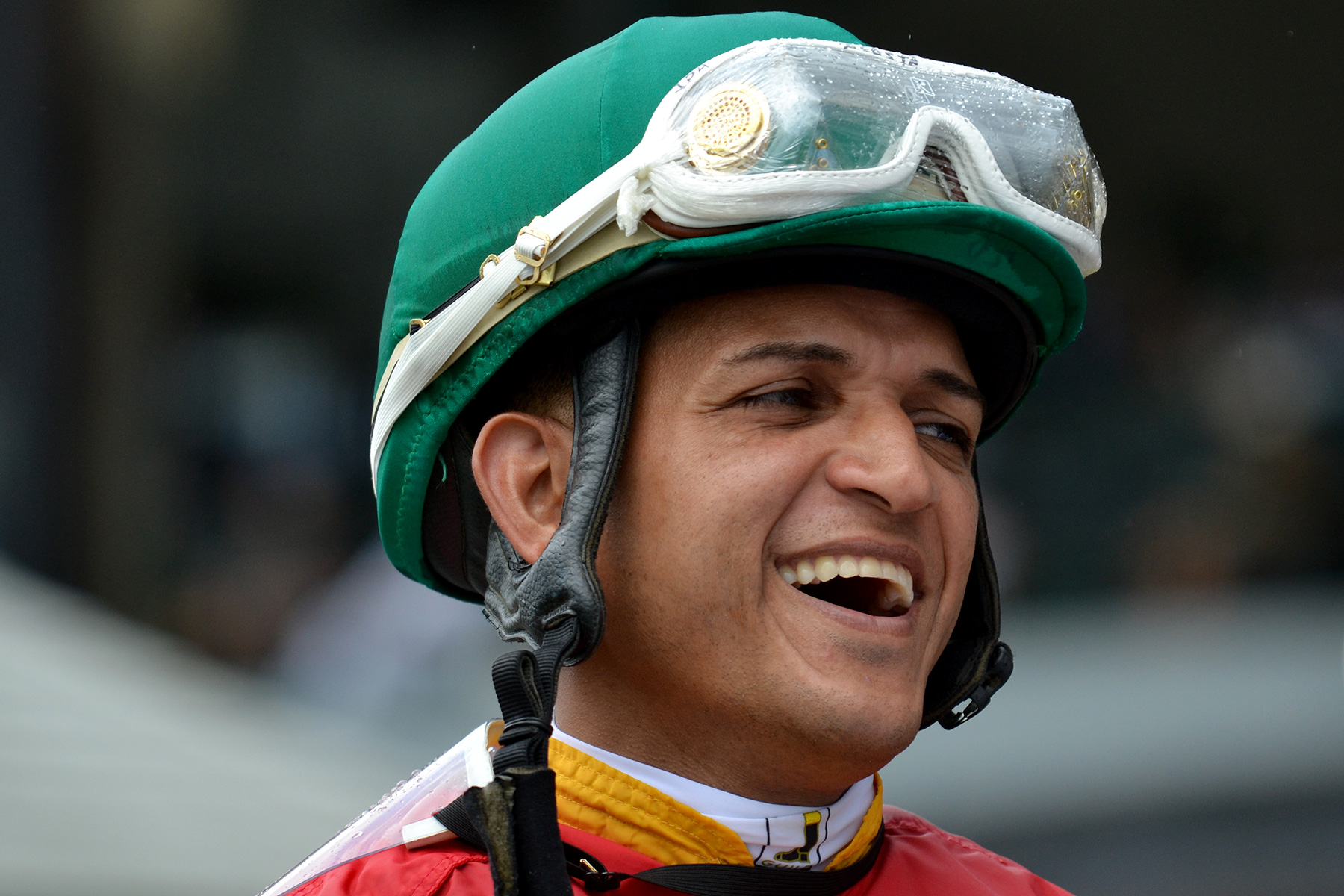
J.D. Acosta, second in the standings with eight wins and earnings of $317,550.
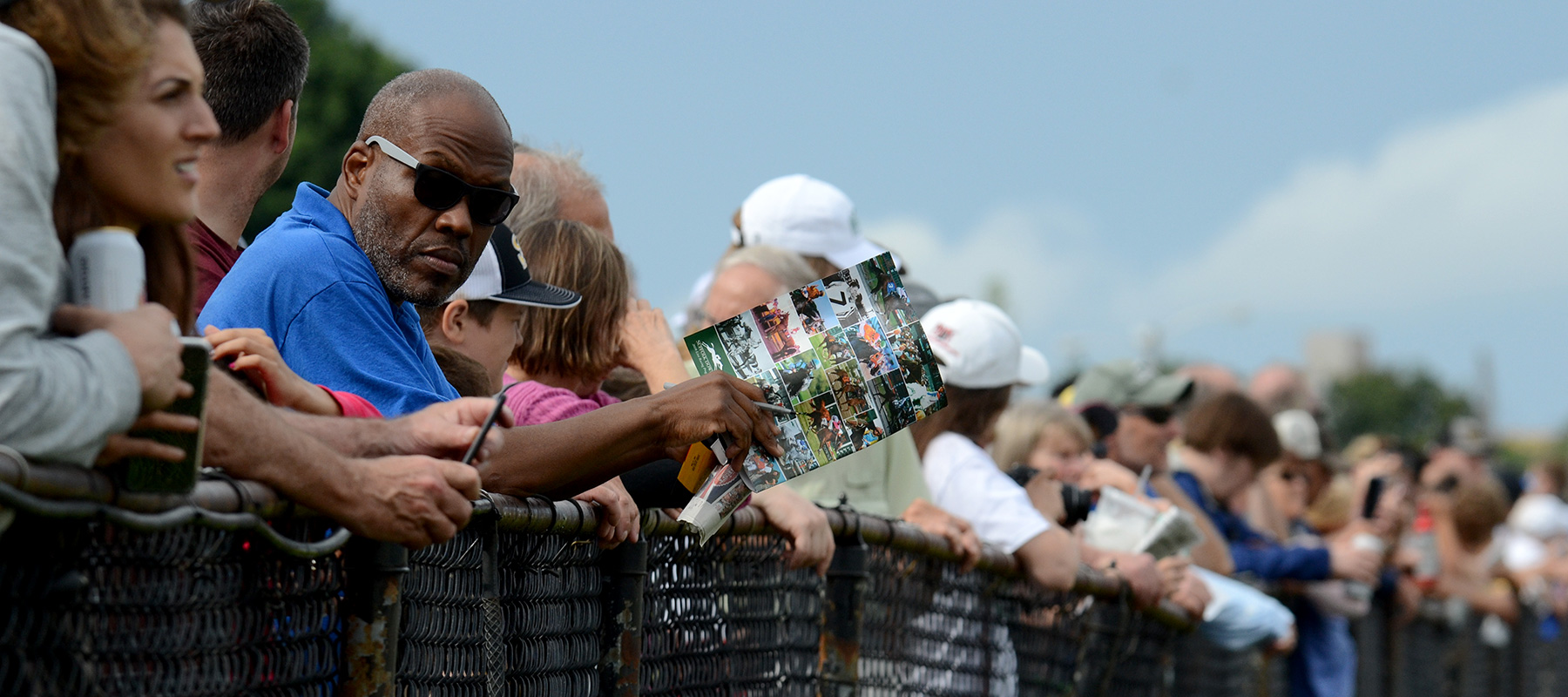
The crowd on the grandstand rail. An estimated 12,311 attended the races on Sunday; the figure for both days was estimated at more than 21,000.
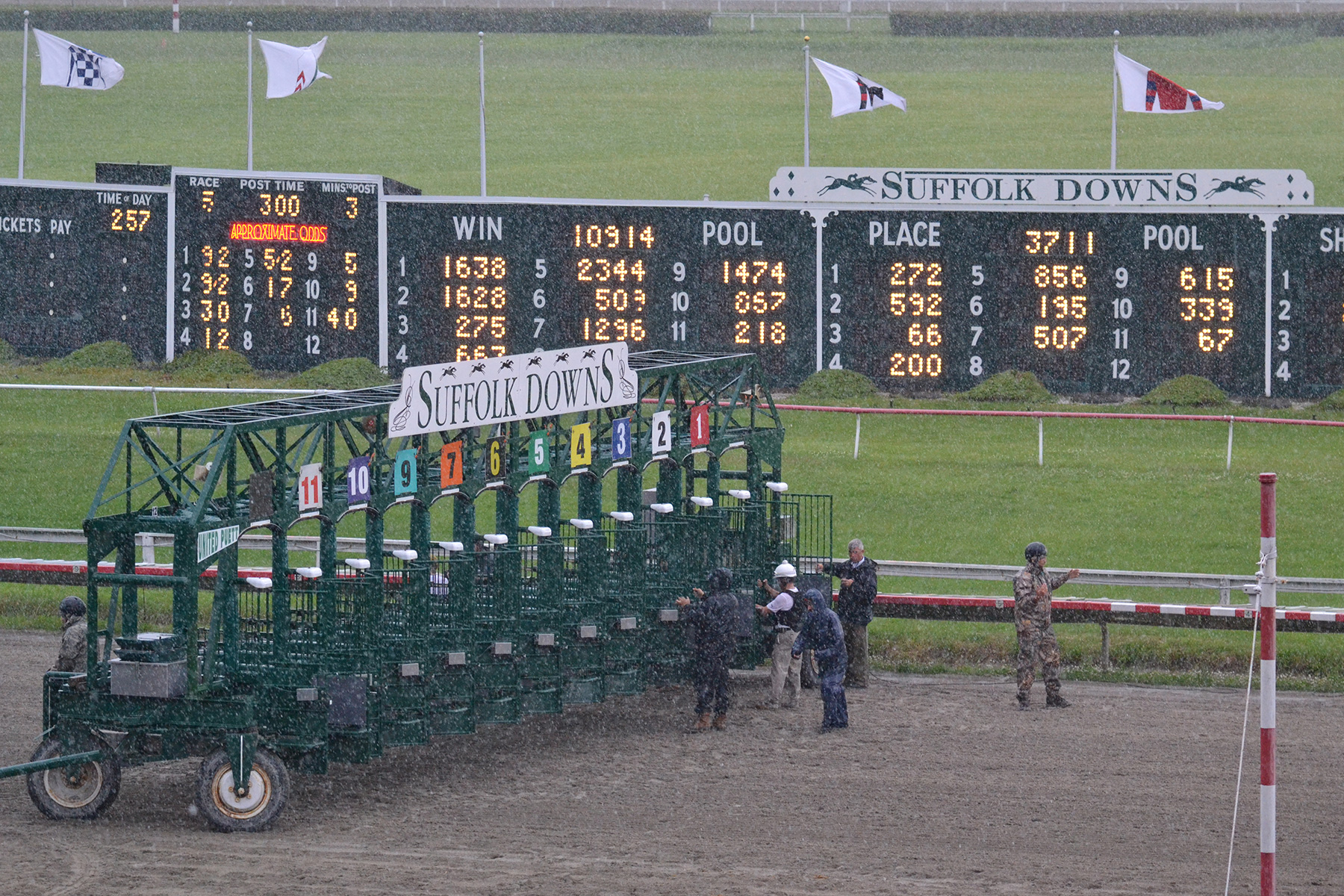
A thunderstorm delayed the start of the fifth race on Sunday.
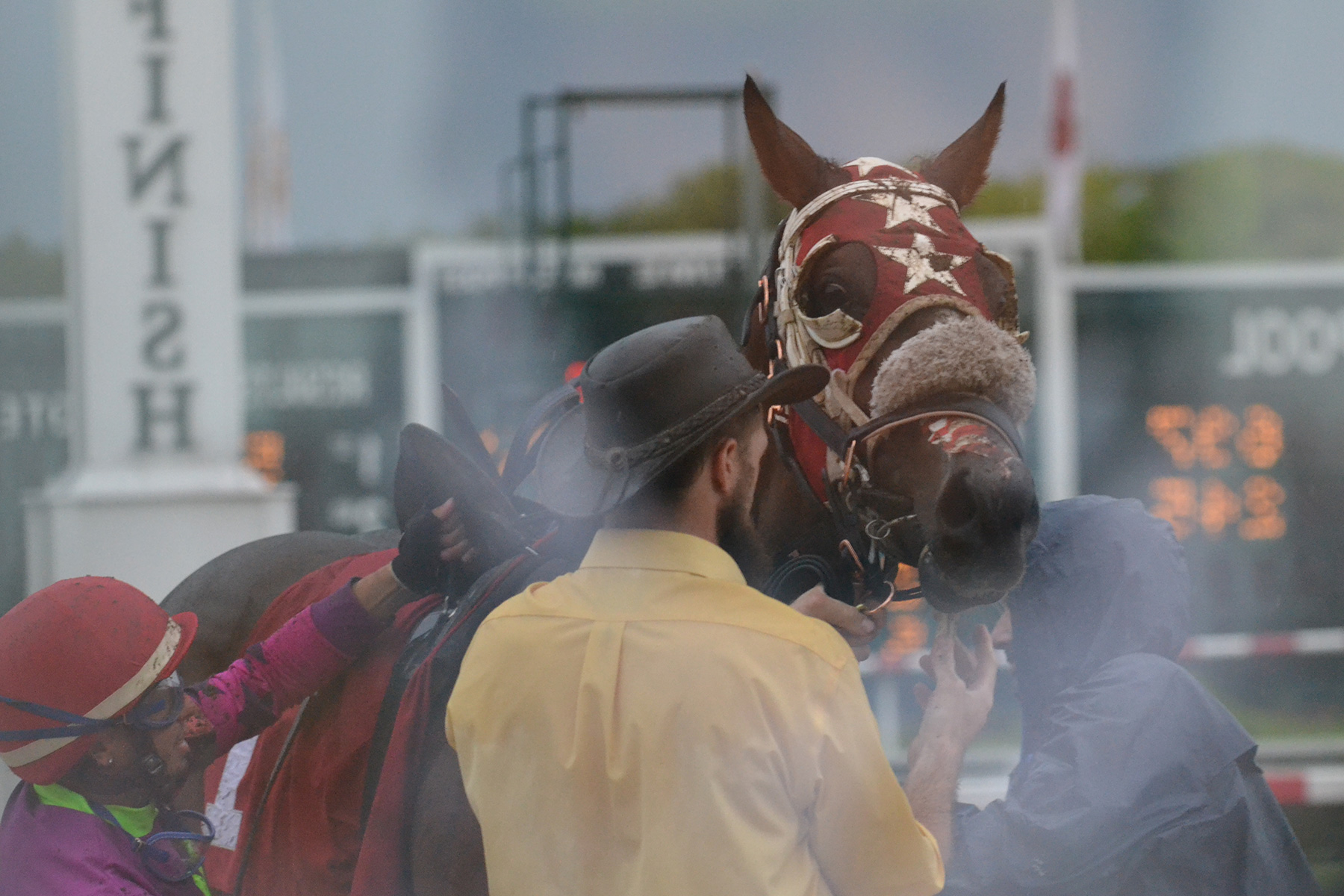
A reflection in the scale house window of a horse being unsaddled.
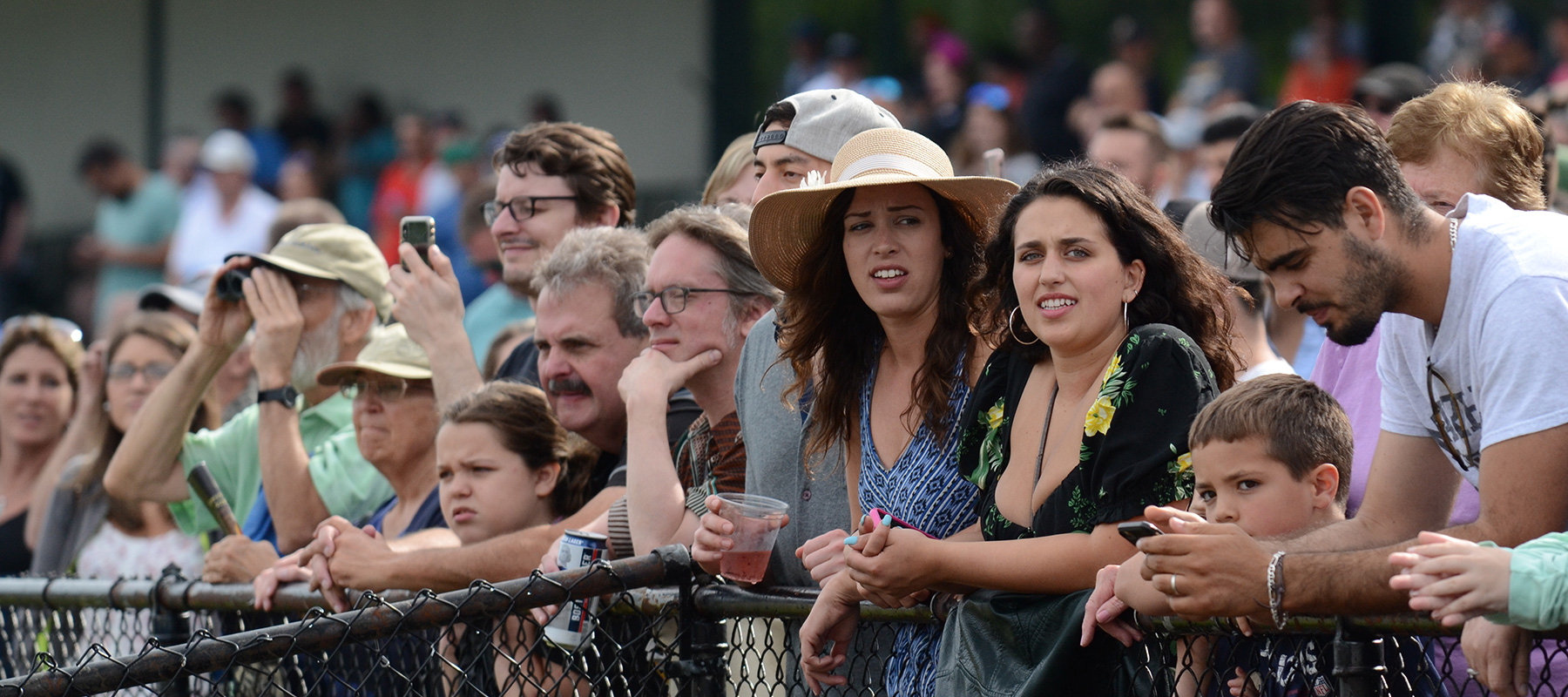
The Sunday crowd along the clubhouse rail.
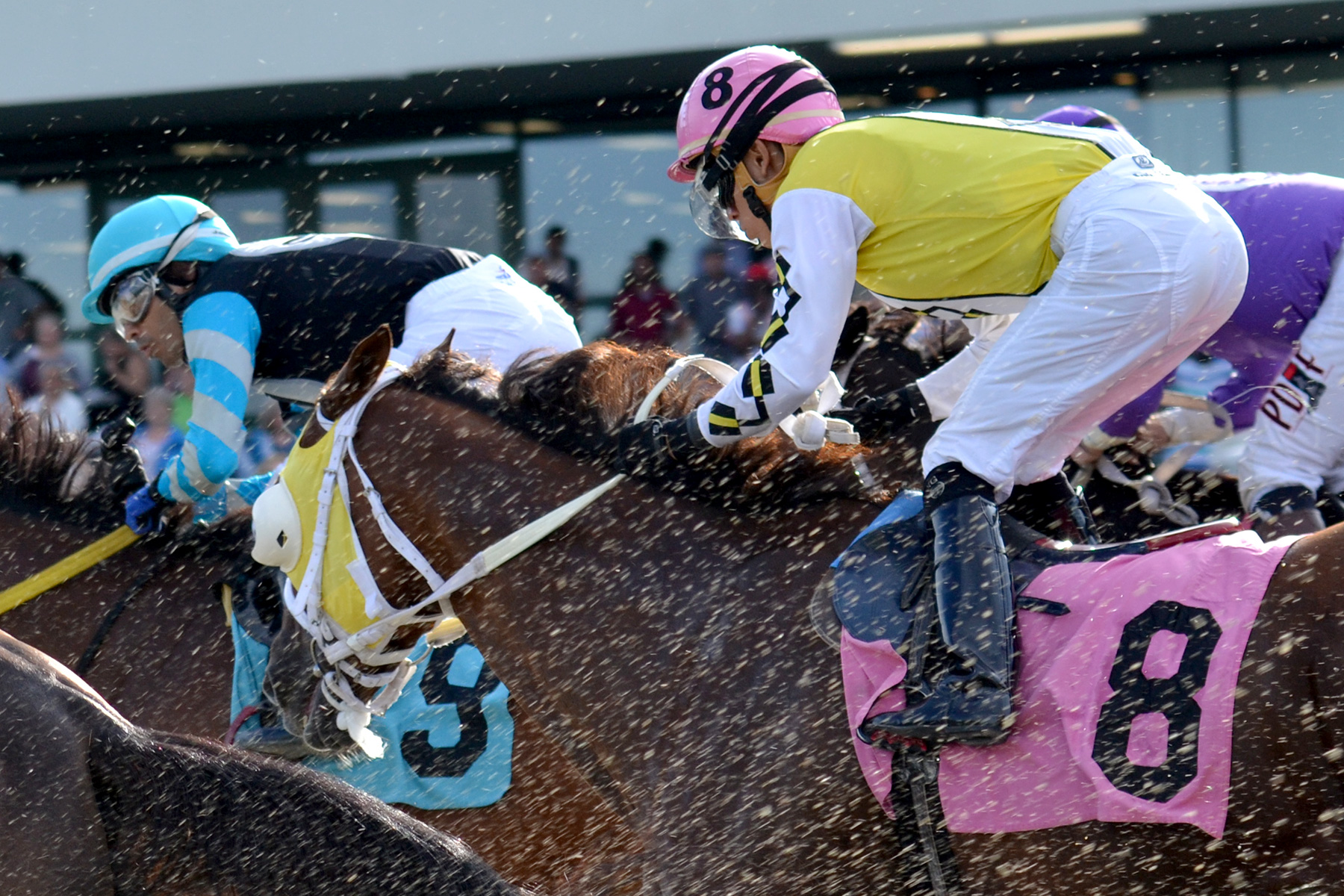
Dirt flies up as the field for race 10 on Sunday — the final race — runs past the finish line for the first time and toward the clubhouse turn.
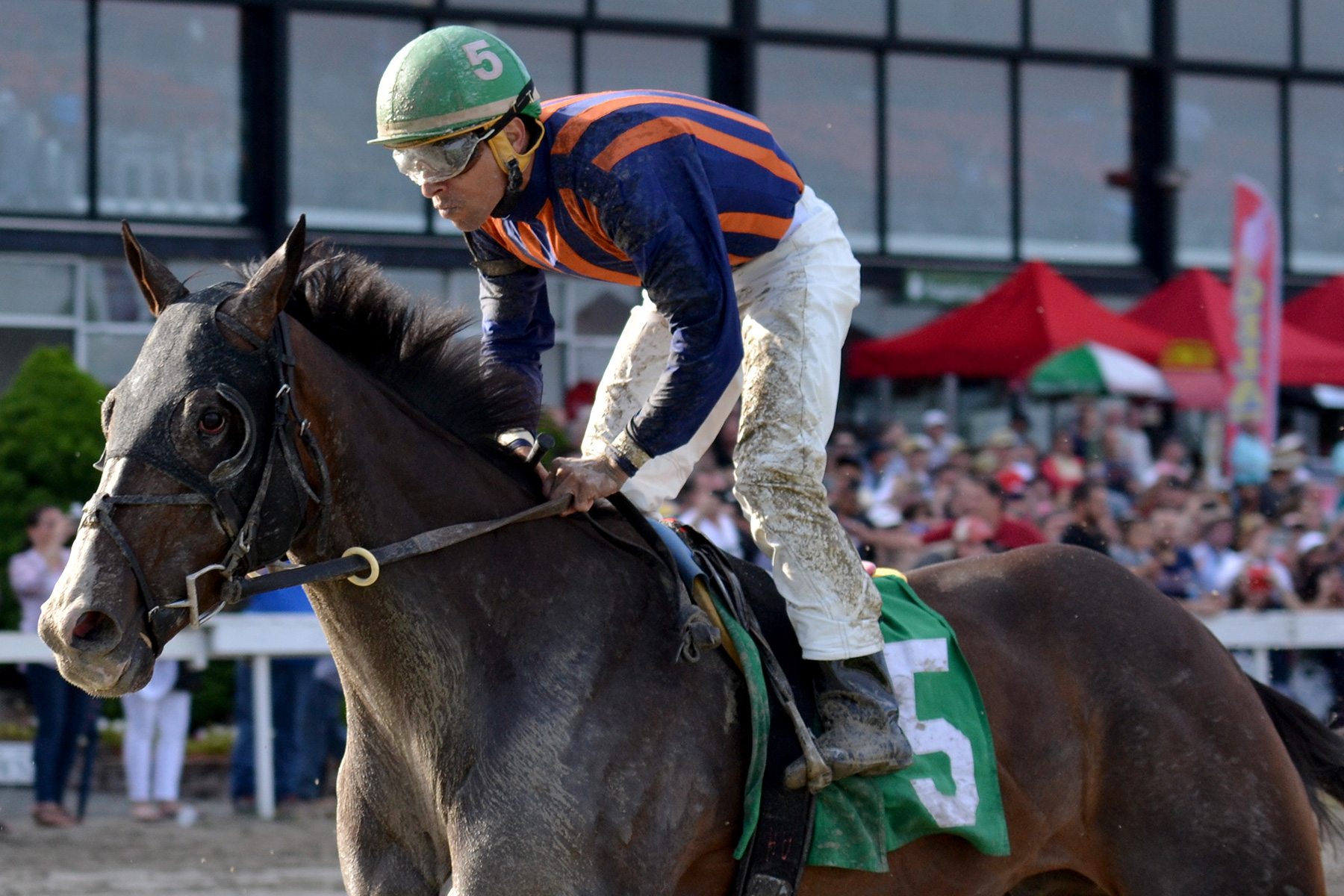
Maiden no more, and now a name for racing history: Catauga County, with rider Andy Hernandez Sanchez, wins the last race at Suffolk Downs.
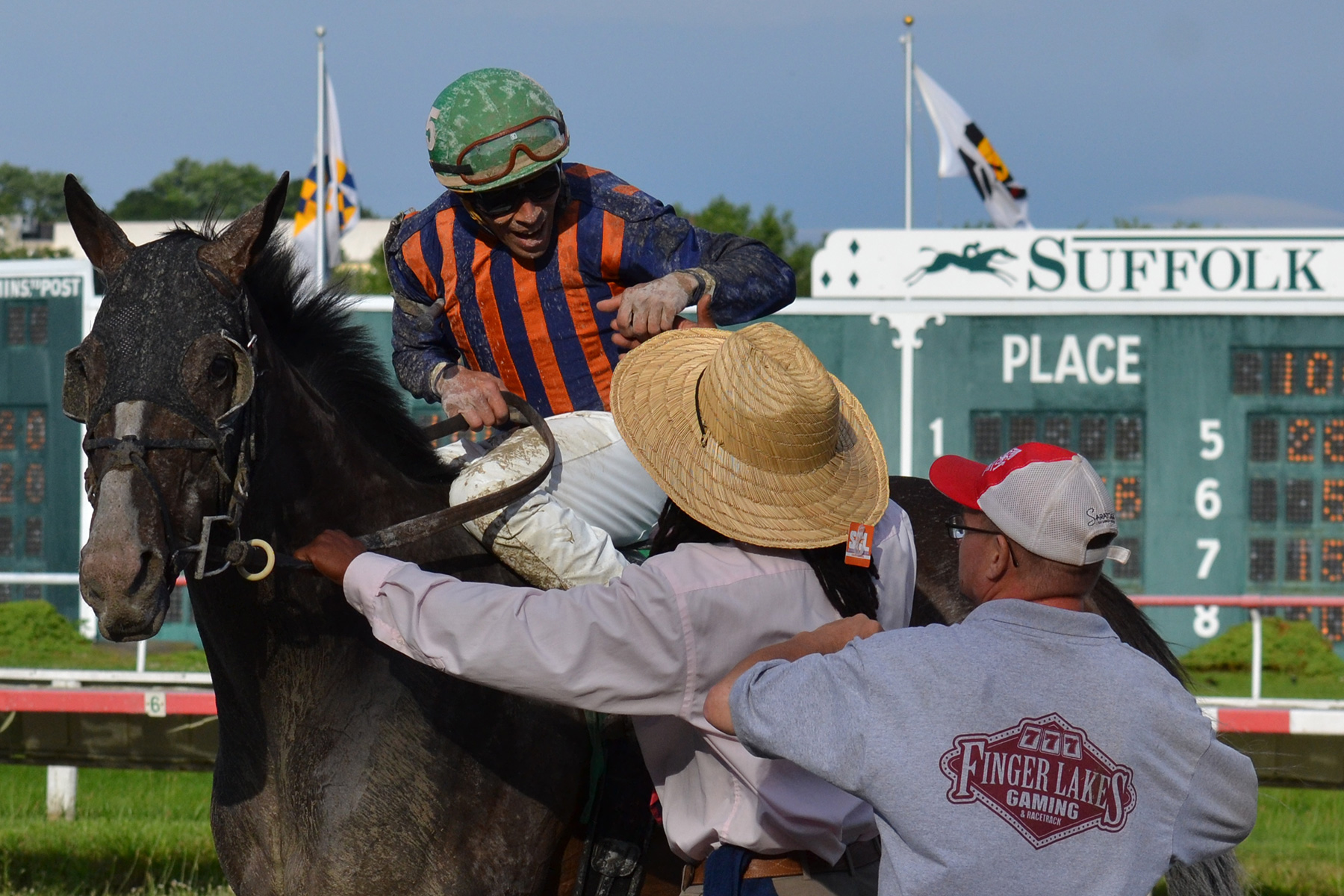
Catauga County returns to the winner’s circle for trainer Neil Morris and owner PathFinder Racing. The 4-year-old Violence gelding paid $5.60 to win.
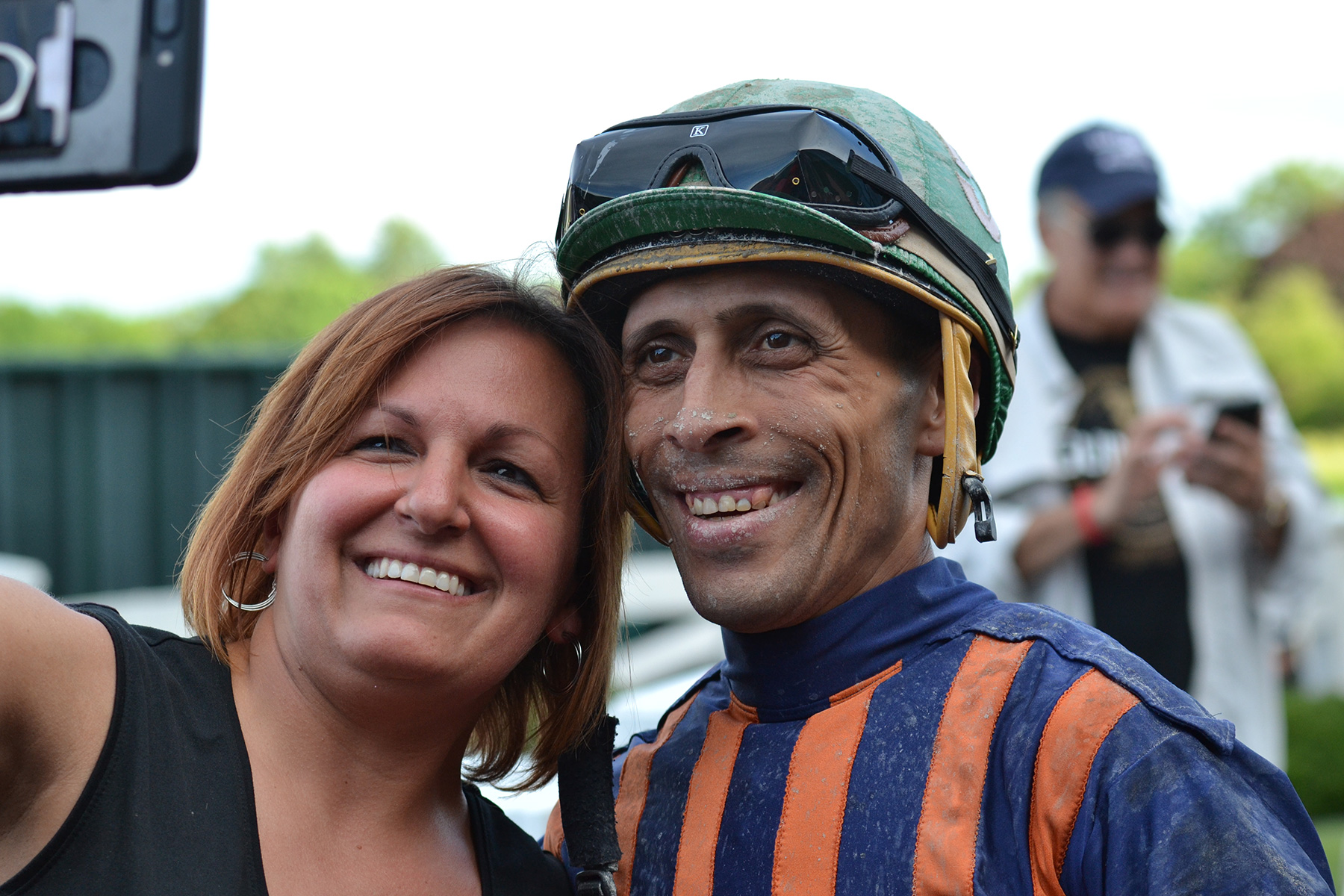
Signing autographs, taking selfies: Hernandez Sanchez finds himself popular with the Suffolk fans after winning the track’s last race.
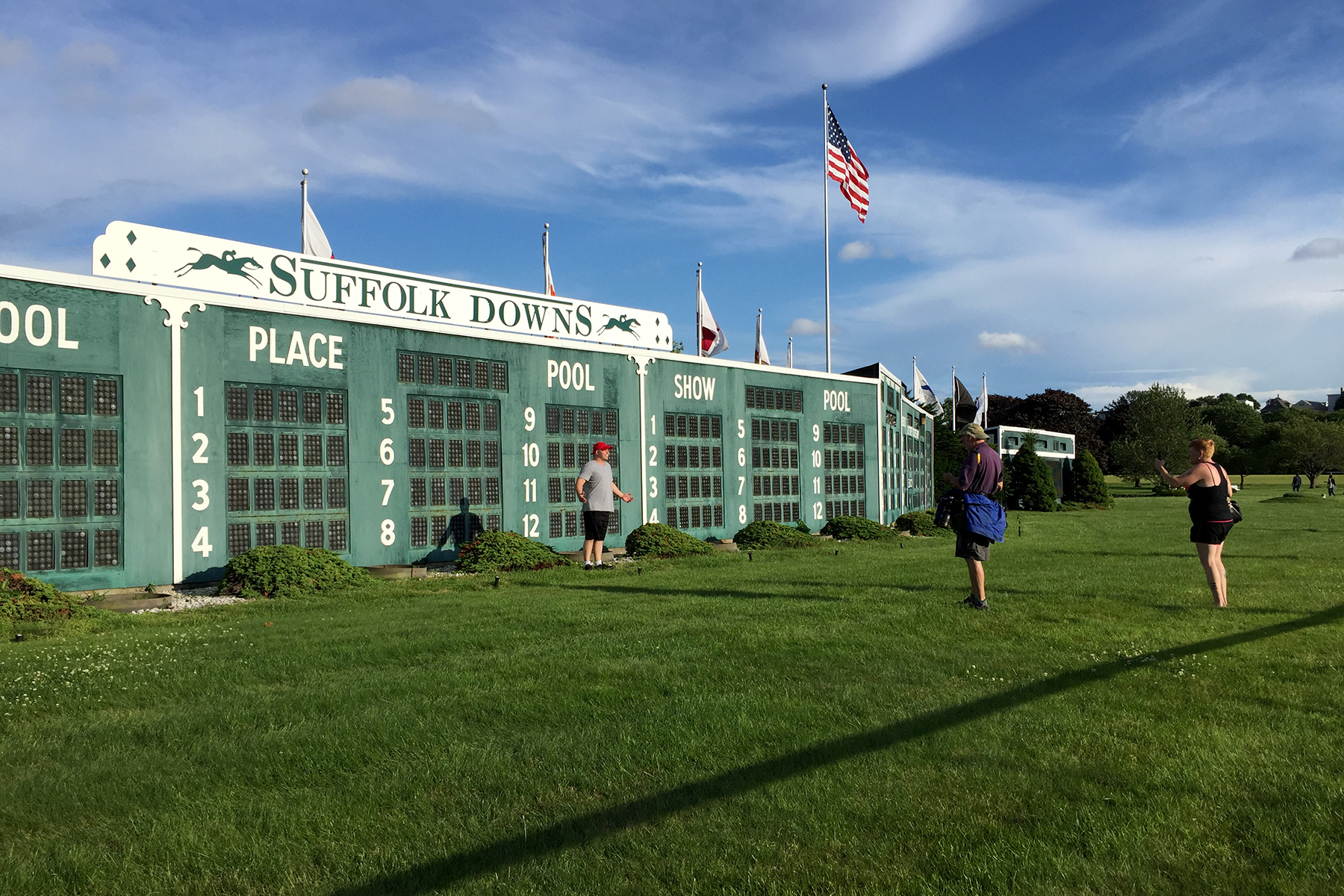
People walked across the track after racing was done to take photos — and to get their photos taken in front of the infield tote board.
2019 Derby Prep Schedule
It’s 10 points towards the Derby gate for Mind Control, winner of the Jerome Stakes at Aqueduct on New Year’s Day. With the start of the 2019 preps, the big Kentucky Derby prep schedule and results spreadsheet — which includes charts, replays, and speed figures — returns for another season.
The Year in Reading, 2018 Edition
Let’s not call this a list of bests — head down in archival literature and grad school for most of the year, I didn’t read as expansively or widely about racing in the past 12 months as I might have in past years to make that kind of claim. These are the stories, and writers, that stuck with me in 2018. Read:
1. Kit Chellel’s profile of Bill Benter, his algorithm, and almost a billion dollars won: The gambler who cracked the horse-racing code (Bloomberg)
2. When Gronkowski (the human) went to Belmont. The details in this story are fantastic! I won’t spoil the fun: A tale of two Gronkowskis, and their day at the Belmont Stakes (Boston Globe)
3. This look at the man who stays behind. Pascual Rivera, barn foreman: What’s the magic behind six Kentucky Derby winners? (Los Angeles Times)
4. Reporting that will break your heart: Hazel Park Raceway closure causes ripple: ‘You don’t do people like this’ (Detroit Free Press)
5. The story of a Minnesota-bred American Pharoah baby that encapsulates all the dreams that drive this game: Triple Crown champion’s colt, born just outside Twin Cities, is a stunner (Star Tribune)
6. Tim Layden on a tremendous call: Remembering Chic Anderson’s call of Secretariat’s record run at 1973 Belmont Stakes (Sports Illustrated)
7. How you never forget the good ones: Dave (Saratoga Special)
8. Insights into how Equibase controls racing data: Getting from ‘Cease and Desist’ to ‘Come Work With Us’ (Thoroughbred Daily News)
9. Diana Hurlburt, on Aqueduct and Suffolk Downs.
10. Hambla Bauer on owning a horse and kicking around the New England circuit in 1940. Yes, this one’s a throwback. My thanks to Eric Banks for the introduction to one of the first women to take a seat in the Saratoga press box: Chicken one day, feathers the next (Saturday Evening Post)
About
Jessica Chapel writes and edits in Massachusetts. Railbird is a Thoroughbred horse racing blog published from June 2004 to July 2019. More / Contact
Elsewhere
Find Jessica on Pinboard and Instagram, Railbird on LibraryThing and Twitter.
Etc.

Links
Search
Boston Racing
Spreadsheets/Data
← Home
Copyright © 2000-2023 by Jessica Chapel. All rights reserved.